Resource Moving from SMS to WhatsApp: Why Indian SMBs are Switching
Published on May 7, 2026
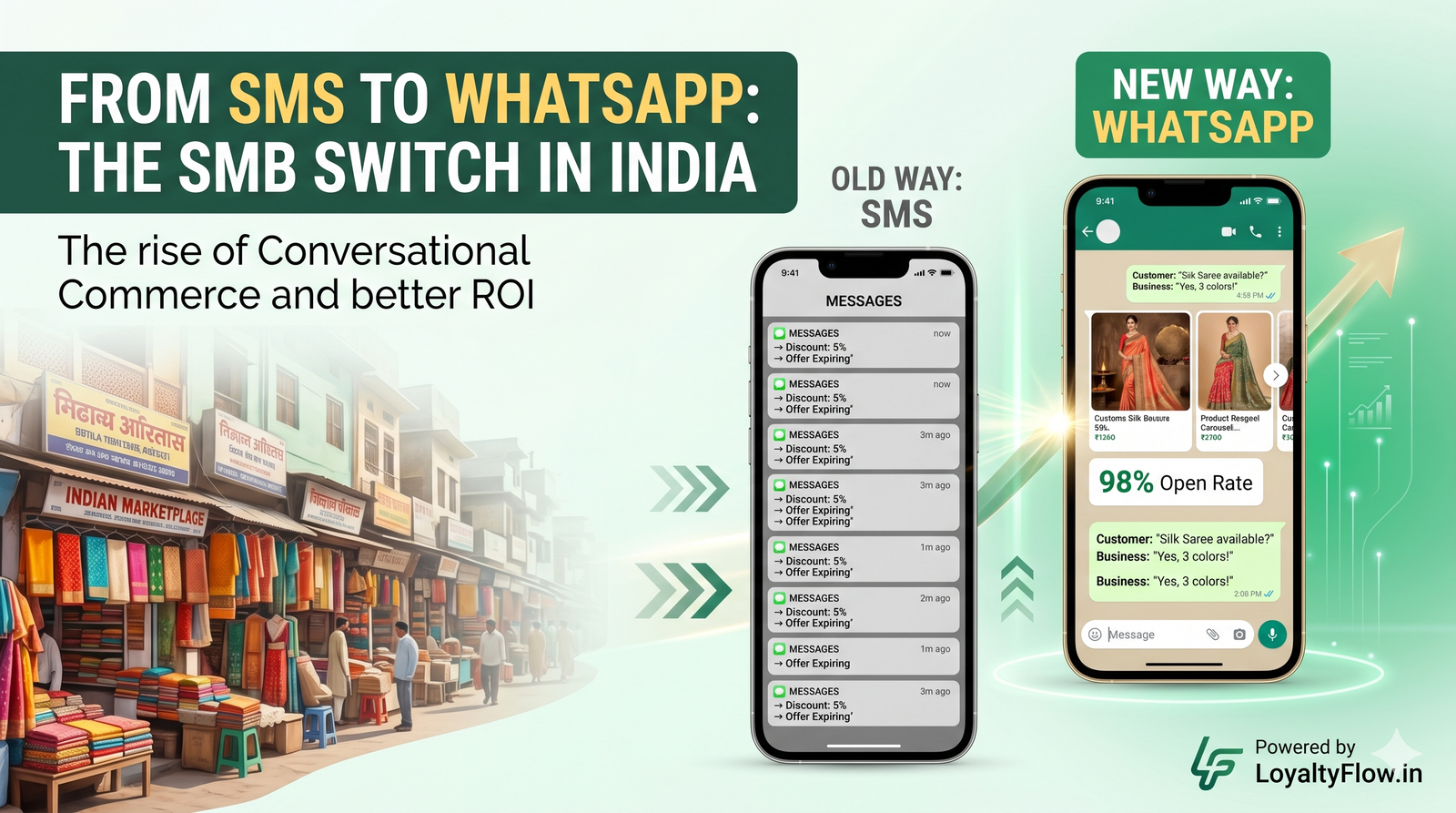
For years, the standard for Indian businesses was simple: send a bulk SMS blast and hope for the best. But in 2026, the "best" has become a 1% open rate buried under a mountain of "DND" filters and promotional spam.
The shift isn't just about technology; it’s about where the Indian consumer lives. With over 535 million active users in India, WhatsApp has transformed from a personal chat app into the country’s most powerful Customer Retention tool. Here is why Indian SMBs are ditching the character limits of SMS for the rich engagement of WhatsApp.
1. The Death of the "Unread" Message
The biggest hurdle with SMS is visibility. Most promotional texts are silenced by smartphones or ignored by users.
-
SMS Open Rates: Average around 20% (and falling).
-
WhatsApp Open Rates: Consistently hit 98%.
When you send a loyalty reward or a festive discount via WhatsApp Marketing, your customer sees it within minutes. This isn't just "reach"—it's Top-of-the-Mind Awareness.

2. From One-Way Alerts to Two-Way Conversations
SMS is a monologue. If a customer has a question about a product you just texted them, they can't "reply" to a short-code (like VK-CHRTYS). WhatsApp enables Conversational Commerce. A customer can:
-
See a new arrival in your Saree collection.
-
Ask, "Is this available in silk?"
-
Receive an instant automated reply or a live response.
This interaction builds Trust, a critical factor for Indian shoppers who value a personal touch before clicking "Buy."
3. Rich Media vs. Plain Text
A plain text SMS cannot compete with the visual appeal of a WhatsApp Catalog.
-
SMS: Limited to 160 characters and a suspicious-looking shortened link.
-
WhatsApp: Allows you to send high-res images, videos, PDFs, and interactive buttons.
By integrating your Media Library with WhatsApp, you can send vibrant product carousels that reflect your brand’s "Quiet Luxury" or artisanal quality, making the shopping experience immersive rather than transactional.
4. Bridging the Offline-to-Online Gap with QR Codes
For retail owners in areas like Varanasi or Lucknow, the journey often starts at a physical shop. Instead of asking a customer to "Text JOIN to 56767," you can place a QR Code (powered by QRFlow) at your billing counter. Scanning the code opens a WhatsApp chat instantly, adding the customer to your loyalty program and capturing their data for future Retention Marketing—all without the friction of a manual signup form.
5. Cost-Effectiveness and Automation
While SMS might seem "cheaper" per unit, the ROI of WhatsApp is significantly higher. With WhatsApp automation, you can handle:
-
Abandoned Cart Recovery: Automatically remind customers about items left in their bag.
-
Order Updates: Send real-time tracking via WhatsApp for higher satisfaction.
- Loyalty Milestones: Automatically notify customers when they earn enough points for a discount.
Ready to stop being ignored? Try LoyaltyFlow.in today and turn your one-way alerts into a revenue-generating conversation.
Frequently Asked Questions
Is WhatsApp marketing more expensive than SMS? While the per-message cost can be higher, the conversion rate on WhatsApp (often 45-60%) makes the cost-per-acquisition much lower than traditional SMS.
Do I need a separate phone for WhatsApp automation? No. Platforms like LoyaltyFlow allow you to manage your business WhatsApp through a centralized dashboard, often without needing the official API for smaller scales.
Is it legal to send promotional messages on WhatsApp in India? Yes, provided you have the customer's consent (Opt-in). Using QR codes at checkout is the most effective way to get legal opt-ins.